
Research shows goal focused founders face post success distress while system based approaches support long term resilience..
Michael Phelps won eight Olympic gold medals in 2008. Jan Koum sold WhatsApp for US$19 billion in 2014. Both moments looked like the summit. Both men later admitted they didn’t want to live.
The pattern isn’t a coincidence—it’s psychology. International Olympic Committee data from 2023 shows that 33.6 per cent of elite athletes experience anxiety and depression during their careers. After retirement, 26.4 per cent face severe mental health problems. But the real shock: Danish researchers found that among Olympians who achieved their performance goals, 40 per cent reported below-average well-being.
The winners felt worse than those who failed

Yale researchers surveyed 151 CEOs who successfully exited their companies. Results: 63 per cent reported less independence post-exit. Fifty-eight per cent felt less valued. These weren’t failed entrepreneurs—they were founders who got exactly what they chased.
The exit obsession isn’t just psychologically hazardous. The data suggests it’s structurally backwards. And what actually works is hiding in plain sight.
The goal paradox: That’s breaking founders
Here’s what makes goal-oriented thinking dangerous:
Dr. Cody Commander, mental health officer for Team USA, describes “maladaptive responses” that emerge when athletes achieve their defining goal—increased alcohol consumption, social withdrawal, identity collapse. “Are they no longer as sociable? Changes in appetite and sleep?” Commander asks, listing warning signs.
Startup founders face identical patterns. Forty-five per cent of active founders—not failed ones, active ones—rate their mental health as “bad” or “very bad.” Seventy-five per cent experience anxiety. Fifty-three per cent suffer burnout.
Post-exit gets worse: 61 per cent report feeling “lost” or “purposeless” within 18 months.
Koum’s confession four years after his US$19 billion Facebook exit: “I thought selling would give me freedom. Instead, it took away my purpose.”
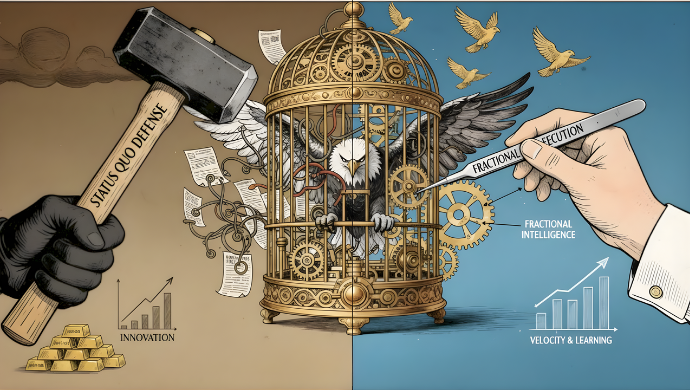
The problem isn’t failure. It’s optimising for the wrong finish line.
What 26 years without VC taught Basecamp
Jason Fried co-founded Basecamp in 1999. Never raised VC. Never chased unicorn status. Over US$100 million in annual revenue for 26 years.
In 2023, Fried described a turning point:
“We set a US$100 million revenue goal. Everyone was pumped. A year later, at US$125 million, we asked: Why did we even pick that number? We pulled it from some expectation we thought we should have.”
His realisation: External goals create arbitrary finish lines. Internal systems create infinite games.
Basecamp’s unglamorous “system”:
- Two to three years of cash reserves
- Profitability over growth
- No to most opportunities
- Weekly improvements, not quarterly targets
They’ve outlasted 90 per cent of VC-backed peers. CB Insights data explains why: while 90 per cent of startups fail within 10 years, companies reaching year 10 have a 92 per cent probability of surviving another decade.
By year 10, they’ve built self-sustaining systems that outlast individual goals.
Amazon’s “day one” vs your Series C celebration
Jeff Bezos’s 2016 shareholder letter introduced the “day one” philosophy: Amazon perpetually operates as if it’s just beginning. “Day 2 companies let stasis take hold. They soon find themselves irrelevant, followed by slow death.”
The philosophy is structural, not metaphorical. Amazon mandates every team track “input metrics”—controllable actions—not just “output metrics” like revenue. This creates “decision velocity”: high-quality decisions made quickly because you’re optimising for process, not outcomes.
When Fire Phone flopped in 2014, Amazon’s stock barely moved. One product’s failure didn’t define the system. Market cap grew from US$250 billion (2016) to US$1.5+ trillion (2024) through relentless iteration across hundreds of improvements.
The lesson: Systems protect against individual failures. Goals don’t.
The Shopify principle: Optimise for who stays
Tobi Lütke told investors in 2022: “We don’t optimise for headlines. We optimise for merchants who stick with us for 10 years.”
This single sentence contains the entire counterargument to exit-obsessed thinking.
Shopify’s approach:
- Weekly incremental improvements across 50+ areas
- Eight-year average merchant retention
- No dramatic pivots
- No exit rhetoric
Gross merchandise volume: US$61 billion (2020) to US$235 billion (2024)—285 per cent growth through “boring excellence.”
Compare this to founders optimising for acquisition multiples: inflated Q4 numbers through unsustainable discounts, paid user acquisition that collapses post-deal, metrics engineered to look good in due diligence but fall apart in integration.
You can win the exit and lose everything that comes after.
The three-system framework
The pattern across companies that thrive long-term, regardless of exit status:
- Financial fortress system
Nintendo maintains US$14 billion in cash reserves—enough to lose US$250 million annually until 2052 without bankruptcy. Financial analysts call this poor capital allocation. Nintendo calls it survival insurance.
Result: survived wars, market collapses, product failures (Virtual Boy, Wii U). Stock grew 340 per cent from 2015 to 2025.
Basecamp’s two-to-three-year runway enables the same freedom: say no to bad partnerships, yes to experiments, survive downturns that kill competitors.
- Identity-based system
James Clear’s research found that people adopting “I am a runner” thinking were 42 per cent more likely to sustain behaviour change after 18 months than those focused on “I want to run a marathon.”
In business: “I am a founder who creates enduring value” survives setbacks that devastate “I want to exit for US$100M.”
Identity tied to outcomes collapses when outcomes arrive. Identity is tied to process compounds forever.
- Input metrics system
Harvard research: companies obsessed with quarterly targets achieved 34 per cent lower long-term returns than peers. Companies with “systematic improvement cultures” outperformed the S&P 500 by 3.2× over 20 years.
Operational translation: track controllable actions, not just results.
Revenue is output. Weekly customer feedback loops are input. You control inputs; outputs follow.
The practical shift
If you’re building toward an exit, consider:
Strategic questions:
- “Will this decision help us exist in 10 years?” (not “Will this boost next quarter?”)
- “Am I building a company I can sell once, or a system I can run forever?”
Operational changes:
- Track customer retention as rigorously as growth
- Celebrate small wins weekly—psychological sustainability comes from daily progress, not distant milestones
- Build multi-year cash runways that enable strategic patience
Exit considerations:
- Remember: 63 per cent of exited CEOs feel less independent post-deal
- Ask: “What’s my identity if this company disappears into an acquirer?”
The bottom line
Michael Phelps eventually found his system—mental health advocacy, sustainable competition, and fatherhood. Koum found his privacy-focused investing, building on his own terms.
But both paid enormous psychological costs for believing the finish line was the destination.
The data across sports psychology, entrepreneurship research, and corporate longevity studies converges: finish lines destroy. Systems endure.
Fried: “We’re not trying to win. We’re trying to keep playing.”
Lütke: “We’re trying to be the most useful for the longest time.”
That’s not modest ambition. It’s the only strategy that scales indefinitely.
The finish line is the most dangerous place to aim. Cross it once, and you’re done. Build systems instead, and you never stop running—on your terms, at your pace, toward a horizon that keeps moving.
The marathon finishers who go viral on YouTube? They’re not celebrated because they won. They’re celebrated because they kept going.
After studying decades of Olympic psychology, entrepreneurial burnout research, and corporate longevity data, the lesson is clear:
That’s the only race worth running.
David Kim is an investment banker turned tech journalist and founder of The Alpha. He is a contributing writer and columnist to Nikkei Asia, E27, TechNode, Korea Economic Daily and other leading Asia-focused publications.
This article was originally published in E27.