
I products fail when they disrupt human workflows, proving adoption depends more on integration than technical performance..
Olive AI raised US$902 million, deployed automation across 900 hospitals in 40 states, and was valued at US$4 billion at its 2021 peak. By October 2023, it was gone. Not because the AI failed — but because a routine Epic module update broke the bots, and hospitals found themselves adding human monitoring on top of the automation they’d paid to replace. A minor interface change. A catastrophic systems mismatch. The product worked perfectly in the lab. The lab was not where nurses actually worked.
Pear Therapeutics received FDA approval for prescription digital therapeutics, then collapsed because doctors had no workflow to prescribe them, pharmacies had no system to fulfil them, and insurers had no billing code to reimburse them. The product existed in a system vacuum. Babylon Health scaled AI diagnostics to millions of users, then watched clinicians run parallel manual checks on every AI output — functionally doubling the workload it was built to eliminate. Both companies shut down in 2023.
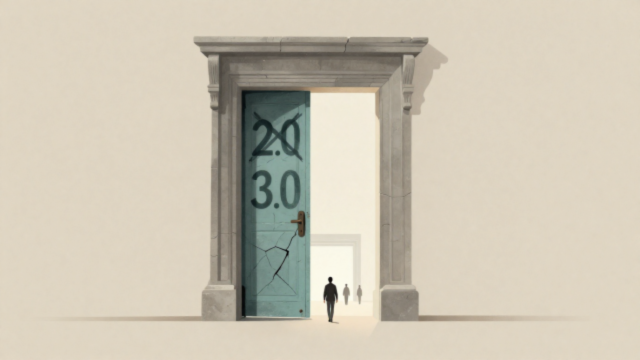
These weren’t technical failures. They were a category error: treating a workflow intervention as a product launch.
Bain’s 2024 analysis of over 900 companies found that 88 per cent of business transformations fail to achieve their original ambitions. IDC puts the annual cost at US$2.3 trillion, more than the GDP of Italy, gone every year from systems that worked and were still rejected. The common finding across McKinsey, BCG, and Harvard Business Review is consistent: the failure driver is not a technical limitation. It is the gap between what a product can do and how people actually work. This is not a medtech story. It is not an agritech story. It is the story of every industry where a human being stands between your technology and its purpose, which is to say, every industry that exists.
The real constraint is human bandwidth, not computation

Ask a clinician why they rejected a diagnostic tool with 15 per cent better accuracy. The answer is almost never distrust of the algorithm. It is four minutes. Four extra minutes per patient is trivial in isolation. Across a 12-hour shift with 30 patients, it is catastrophic — especially when the pharmacy call, the handover note, and the attending physician’s interruption are all queued behind it.
The same dynamic plays out in a fulfilment warehouse where a new routing system adds two extra taps per package scan. In a law firm where a contract review tool requires a different login than the document management system. In a retail bank where a fraud-detection upgrade changes the screen flow that branch staff have navigated by muscle memory for six years. The technology improves the outcome. The friction destroys the adoption.
Research published in NEJM Catalyst identifies the primary barrier to clinical technology adoption not as accuracy distrust but as muscle memory disruption. The same principle holds everywhere humans operate under time pressure and cognitive load, which is most places where technology is now being deployed. Mayo Clinic created a new executive role — Chief Clinical Systems and Informatics Officer — specifically because hospitals now push hundreds of software changes per quarter to clinical staff. Each one is a tax on attention. Accumulate enough taxes, and the immune system activates: staff quietly revert to what they know, regardless of what the trial data showed.
What IDEO actually did, and why it matters
When the American Red Cross hired IDEO to address declining blood donation rates, the instinctive solution would have been to optimise the process: faster check-in, better needles, shorter waits. IDEO did something different. They observed.
What they found was not a logistics problem. It was an emotional one. Donors came in anxious about the needle and left feeling like a transaction. The post-donation routine — sit for 15 minutes, drink juice, eat a cookie — treated recovery as a waiting room problem. Nobody asked what had brought the donor in. Nobody made the moment mean anything.
IDEO’s intervention was not a product. It was a ritual redesign. During the post-donation observation period — when donors had to remain seated anyway — staff handed them a card and a pen and asked them to write down why they had donated. Not for a form. Not for a database. Just to hold, and to keep. The cards were photographed and pinned to a display board in the donation centre, as Post-it notes from a first date, casual and personal and visible to the next person who walked in.
The intervention cost almost nothing. It changed the emotional architecture of the entire experience. Donors who had articulated their own motivation — in their own handwriting, in their own words — returned at dramatically higher rates. They hadn’t just given blood. They’d made a statement about who they were. The Red Cross hadn’t improved the needle. They had changed what the act meant.
The breakthrough wasn’t a better product. It was the recognition that behaviour follows meaning — and meaning, if you design for it, can change everything
This is what anthropological design actually is. Not user research as a checkbox before engineering starts. Not a UX audit after launch. It is treating technology, behaviour, and context as a single system — where the human workflow is not a constraint to be managed around, but the primary design surface.
Over three decades as an investor, I’ve listened to thousands of founders and CEOs explain their technology, their product roadmaps, and their market strategies. Almost none could articulate how customer experience would be architected over time — or how workflow integration would be continuously tested, retrained, and adapted as real-world conditions evolved. The implicit assumption was always the same: build the product, and adoption will follow. It rarely does. And the gap between that assumption and reality is where most of the US$2.3 trillion goes.
The companies getting this right
John Deere’s See & Spray — built on a US$305 million acquisition of computer vision startup Blue River — uses AI to identify weeds and spray only them, cutting herbicide use by up to 77 per cent. It could have been another brilliant system ignored in a barn.
Instead, Deere built the adoption architecture before the product reached the market: three pricing tiers structured around farmers’ capital constraints, software designed so existing precision-ag users were “more than halfway to full autonomy” before touching a new feature. Deere’s CFO framed the goal explicitly as meeting farmers “at every stage of their precision tech journey.” By the end of 2024: record adoption across the entire technology stack.
The insight is not complicated. Farmers — like clinicians, like warehouse workers, like anyone operating under time pressure in a high-stakes environment — are not resistant to technology. They are resistant to discontinuity. Products that require behavioural rupture fail. Products that slip into existing rhythms without announcing themselves compound quietly until they’re indispensable.
Organisations with a structured change-management strategy are seven times more likely to meet their digital transformation goals, per Mendix’s analysis. Not from a better model. From understanding the human system, the model is entering.
A question worth sitting with
The US$2.3 trillion graveyard of failed transformations is not primarily an engineering failure. It is a failure of scope — a discipline that stopped at the boundary of the product and called it done. Superior technology is necessary. It is no longer sufficient. The bottleneck has migrated from the lab to the deployment environment, and most organisations are still staffed for the old bottleneck.
So here is the uncomfortable question — not just for medtech founders or agritech operators, but for anyone building anything that a human being will eventually have to use, adopt, or trust:
If you cut your technical team in half tomorrow and replaced them with anthropologists, ethnographers, and workflow specialists, would your product get worse?
If the answer is no — or if you’re not sure — that uncertainty is the finding. The next defensible moat will not be built in a model. It will be built on the accumulated institutional knowledge of how adoption actually works — knowledge that compounds with every deployment, cannot be licensed, and cannot be replicated from a term sheet.
Start there.
David Kim is a contributing writer and columnist to Nikkei Asia, E27, TechNode, Korea Economic Daily and other leading Asia-focused publications.
This article was originally published in E27.